
How Glyphosphate Affects Plants
Did you know that the first patent on glyphosate, granted in the 1960s, was as a boiler cleaner and descaler ?
Their second patent was granted as an herbicide.
Another patent, applied for in 2003 and granted in 2010, was as an antibiotic and anti-parasitic agent. That patent number is 777 17 36 B2. http://tinyurl.com/l2lv8px
As such, glyphosate interacting with biological systems, be they soils and water, humans, animals or other forms of life, will result in situations in which mineral nutrition is altered and in which bacterial populations are shifted.
Glyphosate will have an adverse effect on all forms of bacteria, but it is especially damaging to beneficial microbial populations, including some species that serve a protective role by controlling some of the pathogenic species. We see this most notably with the Clostridial species of bacteria, with C. perfrigens being removed from the biology, thus enhancing the growth of other pathogenic clostridial species, particularly C. botulinum. Glyphosate also promotes the growth of opportunistic fungi such as Fusarium spp.

We also know that glyphosate enhances the proliferation of fungal pathogens, many of which create mycotoxins.
In the picture below, you will see corn stalks that have been injected with fungal pathogens.
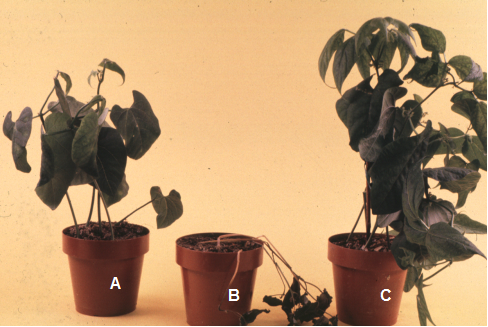
In plants, we use the term defense mechanisms. In humans and animals, we use the term immune system.
Non-glyphosate-tolerant plants that are sprayed with glyphosate die due to secondary “infections” caused by pathogenic organisms. These plants are stressed by the chelation and tying up of nutrients and then exposed to increased concentration of pathogenic organismsconcurrent with a decrease in the beneficial organisms. Natural defense mechanisms shut down and disease kills the plant or weed.
There has been a resurgence of “old and (almost forgotten) plant diseases” – like “take all” in wheat and Goss’s Wilt in corn – as well as a growth in diseases, like sudden death syndrome (SDS) in soybeans. This is being witnessed in fields where glyphosate is the predominant herbicide used.
Soils exposed to glyphosate – just as humans and animals exposed to glyphosate – have special nutritional needs. They need extra nutrients to compensate for the chelation (binding and typing up) of the cations (positively charged particles) – particularly Manganese (which controls Calcium metabolism), Calcium, Copper, Selenium, Iodine,….. (and Zinc and Magnesium and Iron and Potassium…….. and other positively charged particles).
To support continuing research on the effects of glyphosphate in the soil, please contribute to the
Jim Helfter Memorial Fund for the Advancement of Research and Education Concerning Nutrition, GMOs and Glyphosate
Click here to donate online