
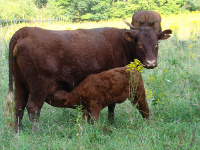
Did you know that most issues found in farm animals stem from errors in nutrition and management ?
These can involve stresses of confinement, effects of unbalanced or incomplete rations, inappropriate use and misuse of supplements, rough handling and bullying by herdmates and humans, the presence of stray voltage, and feeding food that is not suited to the type of animal being fed.
What cows do today typically reflects what was going on in their lives six to nine months earlier.
For sheep, explore at least 3-5 months back to find truly causative factors and, in breeding pigs, you need to look back about that far, too.
The past trail sets the stage for what happens in the immediate moment because it influences nutritional status, cellular and immune function, metabolism and the relationship with the bacterial population they carry. This is important in all species, but particularly so in ruminants, because one of their four stomaches is a big internal vat – the rumen – in which the microbial community therein works to digest the food and make it accessible to the animal for survival as well as the formation of meat, milk and fibre.
Water is an especially critical nutrient.
Animals are made up of a lot of water, just like humans.
In addition to the water in cells, blood and other tissues, the rumen holds a lot of fluid. A mature cow will have a rumen volume of fifty to seventy gallons.
For every pound of dry matter a cow eats daily – and that is around forty to sixty pounds depending on how big she is and how much milk she is making – she’ll drink three to five pounds of water.
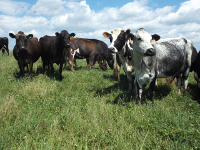
n a milking (lactating) dairy cow, that can be as much as sixty gallons of water a day, depending on her size, the amount of milk she is giving, the makeup of her ration and the ambient temperature. She’ll drink more if she’s not on pasture, too. Cattle raised for beef and dairy cows who are pregnant but not milking have less physiologic demand for water and their daily consumption tends to be between twenty and forty gallons, again depending on weight, feed and weather.